
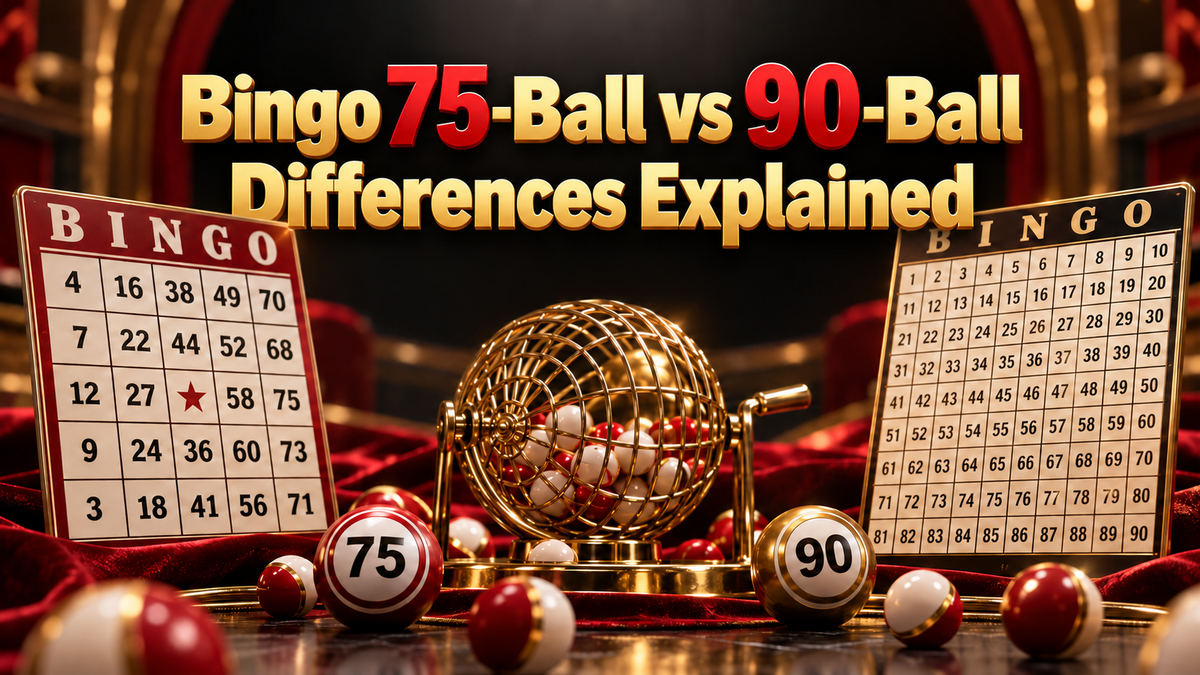
Bingo 75-Ball vs 90-Ball: Key Differences Compared
75-ball or 90-ball bingo, which one actually fits how you play? This guide compares card layout, win rules, and pacing so the right room isn't a guess.
Open an online bingo lobby for the first time and two options sit side by side: 75-ball and 90-ball. Which one actually fits? Same core game on paper, but the card layout, calling pace, and win rules diverge completely once you look closer. This guide walks through exactly where those two formats split, so picking the right room becomes an easy call from the very first visit rather than a guess.
The 5-Second Rundown
- The 75-ball card is a 5x5 grid with one free center space built in
- The 90-ball card is 9x3, but each row only holds 5 real numbers of 9
- 75-ball offers a wide range of win patterns set by each room
- 90-ball follows a fixed three-tier structure: line, two lines, full house
- Call speed and room size both noticeably change how each round feels
Two Cards, Two Completely Different Shapes
Start with the card itself. The list below sums up how the two card structures differ at a glance. After a few rounds your eyes start recognizing positions without needing to scan every square.
- Grid size: the 75-ball card runs 5 columns x 5 rows, while the 90-ball card runs 9 columns x 3 rows
- Total spaces: the 75-ball card has 25 spaces, while the 90-ball card has 27 spaces
- Real numbers per row: the 75-ball card fills every space plus one free center space, while the 90-ball card only fills 5 of 9 spaces, leaving the rest blank
- Number range per column: the 75-ball card locks each column to a B I N G O letter, e.g. column B only shows 1-15, while the 90-ball card runs much wider, 1 through 90 across columns by tens
Why 90-Ball Tracking Trips Up First-Timers
Because each 90-ball row scatters its real numbers across only 5 of 9 spaces, your eyes have to guess which row a called number belongs to. 75-ball feels steadier by comparison, since every space on the card actually holds a number.
Players coming from 75-ball who try 90-ball for the first time often admit the first couple of rounds feel a little disorienting, but the pattern clicks fast once the rhythm sets in.
One Format Bends Any Way, the Other Runs on Rails
75-ball keeps its win patterns wide open, everything from straight lines and corners to diagonals and even letter-shaped patterns show up depending on the room. Whichever pattern applies gets announced before calling starts, every single round.
90-ball runs the opposite way. The structure barely changes: one line first, then two lines, then a full house across the whole card. That means a single round delivers several smaller payoff moments instead of ending the instant one player completes a pattern.
Craving Fast Rounds or a Slow Burn? Pick Your Pace
Anyone who wants short rounds and quick results leans toward 75-ball, since patterns are shorter and a round ends the moment someone completes theirs. It suits players chasing several rounds per hour.
90-ball suits a different mood: more patience, more small wins spaced out within one round before the full house arrives. The pacing stretches out with more moments of anticipation than it looks like on paper.
The Hidden Variables: Call Speed and Room Size
Beyond the format itself, how fast a room calls numbers changes the whole experience. Some rooms fire calls every few seconds to keep things brisk, others space calls out to give players time to check their card, and that pace is usually posted in the room details before joining.
Room size matters just as much. A bigger room usually means a bigger combined prize, but the odds per player shrink proportionally. That's exactly why some players deliberately seek out smaller rooms instead. Some platforms even show a live headcount for each room, so picking a busy room or a quiet one comes down to mood in the moment.
Before You Join Any Room, Check These Three Things
Before joining an online bingo room, it's worth reading the room details first.
- Which format it runs, 75-ball or 90-ball, to know the card structure going in
- What win pattern applies that round, since rooms always announce it before calling starts
- When calling actually starts, so nothing important gets missed right out of the gate
Small details like these build a clearer picture of which room actually fits a given play style. New players might try a slower-paced room first to get comfortable tracking numbers, then move up to faster rooms once that skill feels automatic.
The Small Features Veterans Swear By
Beyond the card format itself, many platforms include an auto-daub mode that marks numbers automatically the instant a called number matches a spot on the card, cutting down on missed calls, especially when playing several cards in the same round.
Some rooms also add a sound or vibration alert as a pattern nears completion, so eyes don't need to stay glued to the screen the whole time. None of this changes the underlying rules, but it makes longer sessions noticeably more comfortable.
Summary: The Real Difference Between 75-Ball and 90-Ball Bingo
75-ball and 90-ball aren't just different names, the card structure, win rules, and pacing diverge from the ground up. Pick the wrong track and worst case, the first round feels a little confusing, nothing more. Know the difference going in and that awkward adjustment disappears. Check the room details before joining, then pick whichever track actually suits how you like to play.
This piece breaks down two bingo formats purely for informational purposes and isn't meant to encourage play. Anyone who notices gaming time creeping into other parts of daily life can find support resources at BeGambleAware.org.