
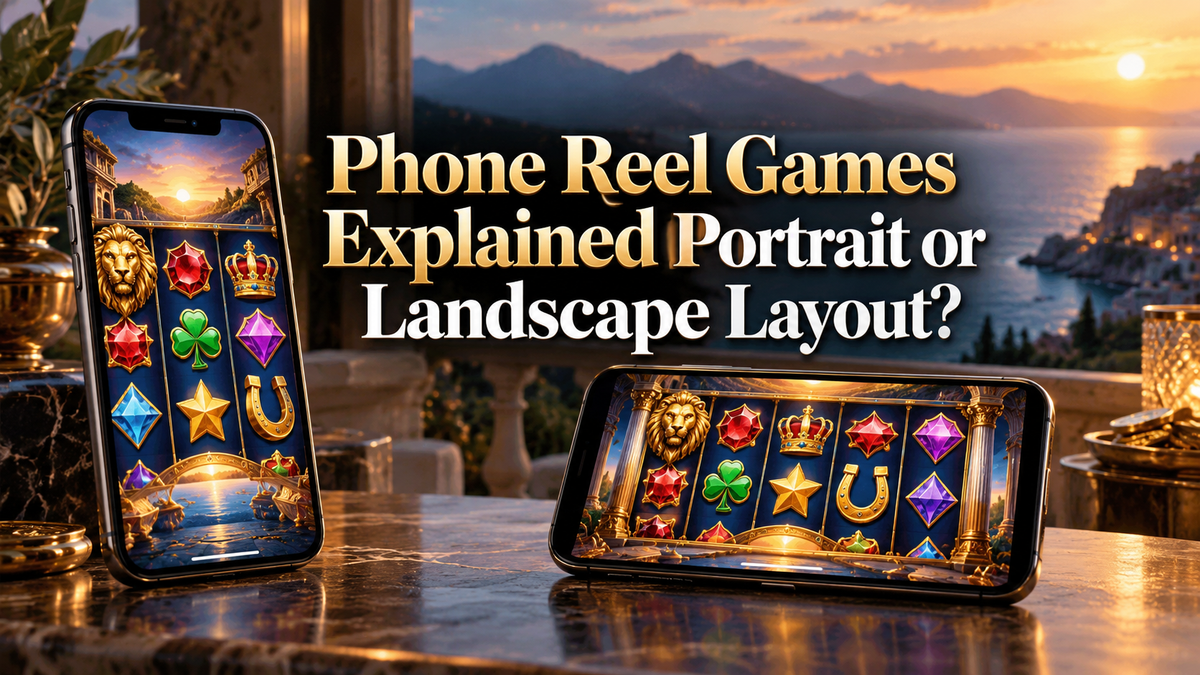
Phone Reel Games Explained: Portrait or Landscape Layout?
Phone reel games adapt to your phone in two ways: portrait or landscape. See how button layout, reel size, and one-hand comfort differ, with examples too.
Ever opened phone reel games and wondered why some hold the reels upright while others ask you to rotate the phone? The difference comes from how developers design the screen from the start. This guide compares portrait and landscape play, covering button placement, reel size, and how comfortable each posture feels, so you can choose the layout that suits you with confidence.
Key Takeaways on Portrait and Landscape
- Most mobile reel games are built with HTML5, so they scale to fit different screens automatically.
- Portrait suits one-handed play because the thumb can reach the main buttons easily.
- Landscape gives the reels more width and feels closer to playing on a computer.
- Well-spaced buttons reduce accidental taps in either orientation.
How Phone Reel Games Fit a Small Screen
Many reel games on phones are built with HTML5, which works across platforms and scales artwork to match different screen resolutions. That is why the same game can open on a small phone or a tablet without the picture spilling past the edges. Developers set the main proportions of the Mobile Reel first, then shrink or enlarge the remaining elements to fit the space available.
Another difference from desktop play is that a phone screen offers limited room, so the game shows only what is necessary: the reels, the spin button, and the balance. Other information panels open only when the player asks for them. This keeps the screen tidy and easy to read even when you hold the phone with one hand.
Why Portrait Works Well for One-Handed Play
Portrait is the posture most people already use when scrolling messages or social feeds. A portrait reel game puts the reels in the middle of the screen and moves the controls to the bottom, right where the thumb can tap without shifting the hand. It suits commuting, queuing, or any moment when only one hand is free.
There is a second advantage. Mobile browsers use an address bar and menu bar that take up room once the phone turns sideways, while portrait leaves more of the play area untouched. Players therefore see the whole reel grid without scrolling the page.
What Landscape Offers That Portrait Does Not
Landscape is the same format reel games use on a computer, so there is room at the sides for the pay table and spin history to sit close at hand. The reels are also wider, which makes every symbol easier to see, especially in games with many rows or a large grid.
The trade-off is holding the phone with two hands, which is less convenient while traveling. You may also need to switch off the screen rotation lock first, because some browsers do not let a game force the orientation by itself.
How Button Spacing Differs on a Mobile Screen
In either orientation, a well-designed game leaves enough space between the spin button, the level-adjust buttons, and the extra controls so players do not tap the wrong one by accident. Things worth checking when you start a new game include:
- The spin button should be large and within thumb reach.
- The level-adjust buttons should not sit too close to the spin button.
- Text on buttons and the balance should stay readable in outdoor light.
- The settings menu should open easily and close with a single tap.
Trying a few test taps before real play shows whether the buttons sit comfortably under your hand, and it helps you decide quickly which posture works better.
Common Misunderstandings About Rotating the Screen
Many people assume that rotating the screen to landscape makes a game load faster or changes the result of a spin. In reality, changing orientation only changes how the picture and buttons are arranged. The random system behind each game runs on the provider's side and has nothing to do with how the player holds the phone, so neither posture changes the outcome.
Another misunderstanding is that a game without landscape support must be poorly made. Some developers deliberately design for portrait only so that one-handed play stays comfortable, which makes it a design choice rather than a technical limit. Games that support both postures usually have to adapt the Mobile Reel to two different screen proportions.
The last point concerns battery life and heat. Long sessions on a bright screen warm up the phone and drain the battery quickly, whether you hold it upright or sideways. Lowering the brightness and taking short breaks helps far more than changing the way you hold the phone.
Choosing the Right Posture for Your Situation
No single posture is best every time. It depends on where you play and how you hold the phone. A simple order for choosing looks like this:
- If you play while traveling or hold the phone with one hand, start with portrait.
- If you want to see the pay table and every symbol in the full grid, try rotating to landscape.
- If your phone has a small screen, pick the posture where the buttons are not crowded together.
- If the game does not rotate the way you want, check your phone's screen rotation lock.
Switch between the two and keep whichever feels most comfortable, because comfort affects how smoothly and enjoyably you play more than most people expect.
Portrait or Landscape: Which Posture Fits You Better
Portrait and landscape differ clearly in display area and how easy the phone is to hold. Portrait stands out for one-handed play and buttons near the thumb, while landscape stands out for wider reels and side information. Once you understand these differences, choosing the posture that matches your situation becomes much easier, and every session feels more comfortable.
This article offers general information about screen design only and does not encourage anyone to play. If play starts to affect daily life, take a break and contact a support organization such as BeGambleAware.org.